Friday, 19 August 2016

Make Food Legal: Turning ‘Waste’ Into Meals | Earth Day Network


Oxfam reports that almost a billion people do not have enough food to eat every day. That’s a heck of a lot people considering we produce around 20% more food than the current population needs.

Making our food distribution systems better is no longer a suggestion, it’s a necessity. Some countries are already blazing ahead to reduce food waste and get food to those whom need it the most. Take Italy for example: earlier in August the nation introduced new laws to cut food waste by 1 million tons per year. The laws removed red-tape and blocks that made it hard (or even illegal) for places such as supermarkets and farms to donate food. Donating food past its expiry date and allowing businesses to record their donations and the end of the month, rather than five days before, has been approved by parliament. Not only that, but the government also introduced a line of incentives to retailers and consumers to prevent food waste; ‘doggie-bags’ are being rebranded as ‘family-bags’ and one million euros

Make Food Legal: Turning ‘Waste’ Into Meals | Earth Day Network


Oxfam reports that almost a billion people do not have enough food to eat every day. That’s a heck of a lot people considering we produce around 20% more food than the current population needs.

Making our food distribution systems better is no longer a suggestion, it’s a necessity. Some countries are already blazing ahead to reduce food waste and get food to those whom need it the most. Take Italy for example: earlier in August the nation introduced new laws to cut food waste by 1 million tons per year. The laws removed red-tape and blocks that made it hard (or even illegal) for places such as supermarkets and farms to donate food. Donating food past its expiry date and allowing businesses to record their donations and the end of the month, rather than five days before, has been approved by parliament. Not only that, but the government also introduced a line of incentives to retailers and consumers to prevent food waste; ‘doggie-bags’ are being rebranded as ‘family-bags’ and one million euros

Wednesday, 22 June 2016

World Environment Day Tree Planting Held on June 4, 2016 At Delmonte Kenya Limited, Thika


Ms. Carolyne Kyalo (Left- The blogger) and Former Principal ( CAVS - UoN), 
Agnes Mwang'mbe (Right) Planting a tree during World Environment day 2016.
The University of Nairobi (UoN) staff and students from College of Agriculture and Veterinary sciences (CAVS) and College of Humanities and Social Sciences (CHSS) participated in marking the World Environment Day (WED) by planting trees and inter-corporate sports. A total of 44 students and 4 staff members attended the event. They were led by the Coordinator, CAVS Environmental Sustainability (ES) committee and Prof. G. Kironchi, and the former Principal CAVS, Professor Agnes Mwang’ombe assisted by  Ms.Carolyne Kyalo and Ms Esther Waribu both from department of Land Resources and Agricultural Technology (LARMAT). Over 2500 tree seedlings were planted. The following institutions participated in the planting occasion:
  1. Del Monte Kenya Limited
  2. University of Nairobi (CAVS & CHSS)

Thursday, 20 August 2015

UNO interessiert sich für den Emmentaler Wald


Climate change practitioners in a  Secondary forest at 
 Emmental west central Switzerland.The blogger in the middle in red jacket

Wednesday, 17 December 2014

"Is climate change adaptation or investments"


Future of climate Change resilience
  • Building capacity, Enabling society and ecosystem to bounce back to change on  success
  • Should support adaption planning and action
  • Ensure ecosystem are  healthy and adverse
  • Access to information
  • Help people to understand adverse effects and prepare  in response early warning systems
  • Access to technology and services and access to  quality infrastructure
  • We need to reform our  model development
  • Deploy new technologies


Financial resources especially to vulnerable countries to build investments
Strategies to build climate disaster and climate resilience
Implementation of national implementation plans
Establish awareness among local people
Opportunity to improve society and livelihoods
We must all  address , take responsibility  and commitment to address  climate change

Saturday, 12 April 2014

Meatless movement vs greenhouse gases


Did you know that the meat industry is responsible for approximately 20% of the world’s greenhouse gas emissions? In fact, producing one calorie of meat requires nearly twenty times the amount of energy as one plant calorie!

With global meat consumption tripling over the last four decades, meat industry generates nearly one-fifth of the man-made greenhouse gas emissions that are accelerating climate change worldwide – more than the entire transportation sector.

To make matters worse, producing meat also requires a huge amount of water. An estimated 1,800 to 2,500 gallons of water go into a single pound of beef. By comparison, soy tofu produced in California requires only 220 gallons of water per pound.

Imagine how much carbon and resources we could save if we ate less meat. Even just eating meat one less day a year would make a difference.

If we want to make a real dent in the world’s carbon footprint and reduce our own personal footprint, we need to eat less meat.


Thursday, 17 October 2013

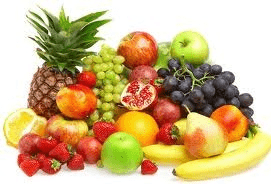
Fruits: Diet, Healthy nutrition and value addition


Everyone knows that fruit is really good for you, and should be regularly included in your daily diet. It does not matter what form it takes, be it juice, whole and fresh, or processed, as long as you are careful about the type of processed fruit you use. Some have way too much added sugar to be healthy, so be sure to read the labels. Do your research, because studies are done all the time, and opinions will change. Wine, for example, used to be frowned upon, at least until it was discovered that the antioxidants that grapes possess transfer intact, to the wine, making it healthy to drink once more.

Another Source of Water
A surprising side benefit that comes from fruit and nutrition is that including fresh fruit into your diet will also provide you with an additional serving of water every day. The standard, according to nutritionists, is to drink at least eight glasses of water. A medium sized piece of fruit, one that is naturally juicy, like oranges, can be substituted for one of those glasses, making it easy to incorporate both water and fruit into your diet.

Fiber
Another item that is often recommended for healthy nutrition is to up your consumption of fiber every day. This will help you to improve your digestion, and keep you regular. According to recent studies in fruit and nutrition, you can easily add fiber to your eating regimen simply by adding at least one portion of fresh fruit to your meals. Apples, bananas, melons and grapes are great for this, and easy to eat on the go, if need be.

Helps Weight Loss
When it comes to dieting and the consumption of fruit, you cannot go wrong by using fruit for purposes of snacking. Fruit, no matter its form, are some of the lowest calorie foods that you can find. Making snacks out of fruit is just smart, because they will not destroy your count per meal. And, as an added bonus, they also make great appetite suppressants, thanks to the amount of water they provide.

Vitamins and Antioxidants
Next to the production of patent medicines, the next multi-billion dollar industry has to be the creation of over the counter vitamins. Why clog up the countertops with countless bottles to get the vitamins you need, when you can get them directly from the source: fruit! Combined with the right amount of vegetables, you can take in all the vitamins a healthy diet requires, just by eating a balanced diet. And, as a bonus, you also gain sources of antioxidants, which boost the immune system and fight off all the nasty pollutants from the air, sun and water, especially carcinogens.


Money Savers
With the costs of processed foods continually on the rise, you can easily argue the foods in your diet, and save money, by buying fresh fruit whenever possible. Admittedly, canned might be easier to handle, but its cost is much higher, because it often includes a percentage of the cost of processing and canning. Eating fresh is also healthier, because you will not have all those preservatives and additives, like sugar, busting your diet by their presence.